
10 | Udawalawe Elephant Safari & Elephant Transit Home
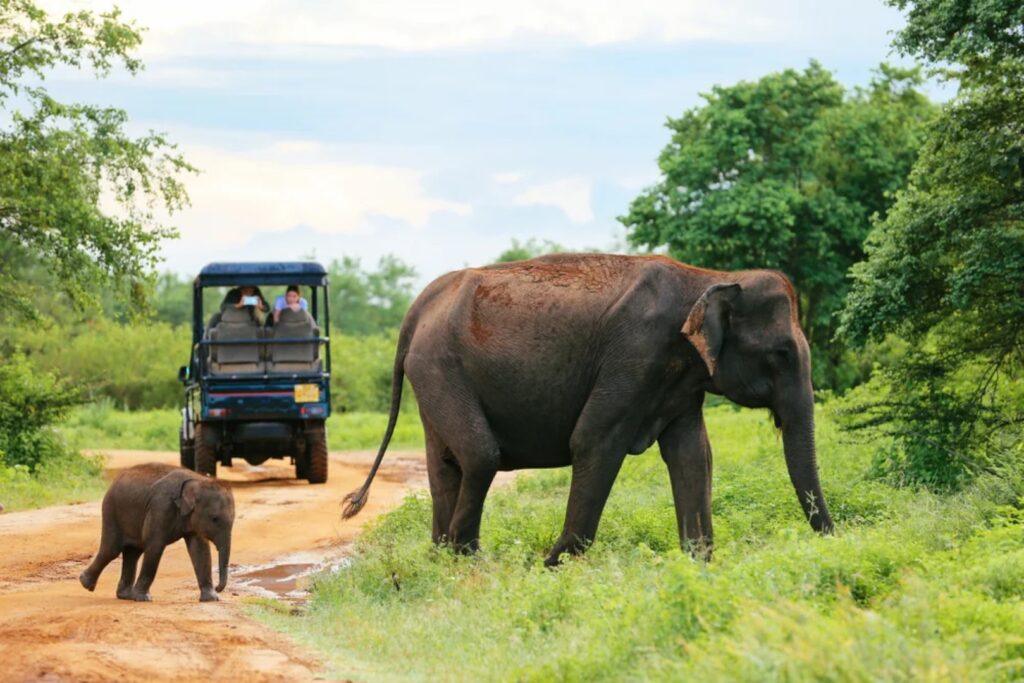
Udawalawe exists because of a dam. When the Walawe river was impounded to create the reservoir, the national park was declared in 1972 to give displaced wildlife somewhere to go – and today a population of around 250 elephants lives here year-round, drawn by the water. That makes it the most dependable place on the island to watch herds behave naturally: calves sheltering beneath matriarchs, young bulls testing each other, families dust-bathing at the shoreline. The day opens with a dawn drive, pauses for lunch, then moves to the Elephant Transit Home on the park’s western edge, where orphaned calves – most separated from their mothers by human-elephant conflict – are fed through a funnel and raised with as little human contact as possible, so they can return to the wild at around four or five years old.