
Galle Fort Architecture Walk with Colonial Heritage Specialist
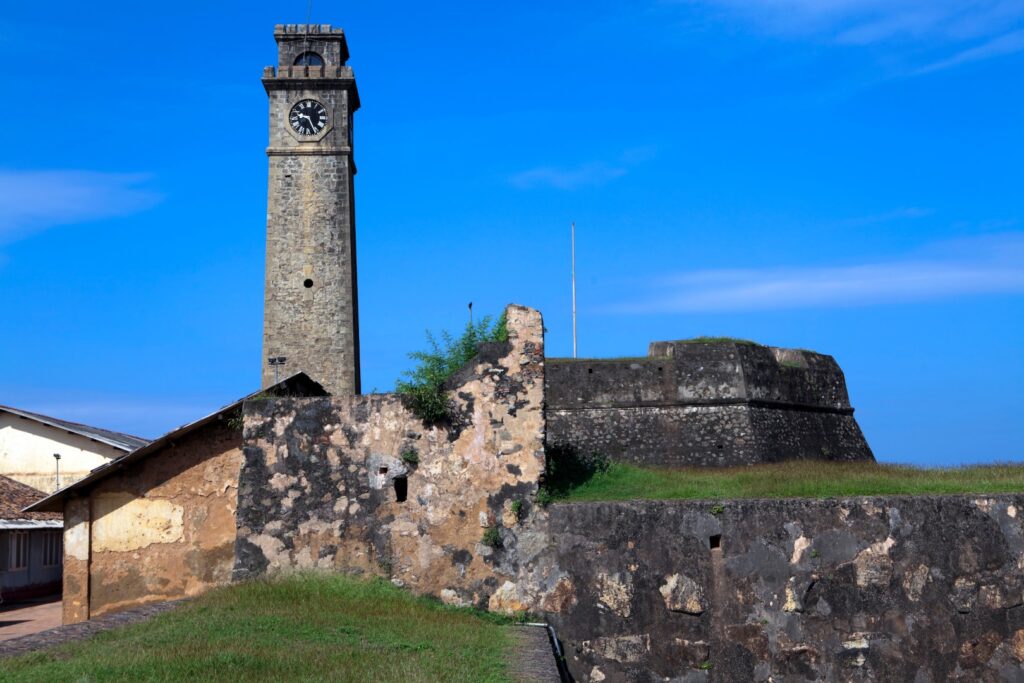
Galle Fort can be read like a building manual, and your guide shows you how. It starts at the Old Gate, where the Dutch East India Company’s VOC monogram and the date 1669 face inwards while the British royal arms were later added to the outer face – two empires on one arch. From there: Zwart Bastion, the oldest, a Portuguese survivor; the street grid the Dutch laid out over a sewer system the tide flushed out to sea; the deep verandahs and high ceilings of the merchant houses; and the Groote Kerk, remodelled in 1755 with old gravestones set into its floor. The later layers follow – the 1883 clock tower, the 1904 Meeran Mosque, the 1939 lighthouse – before you finish on the ramparts at golden hour.
Polonnaruwa Ancient City – Heritage Cycling with Specialist Guide
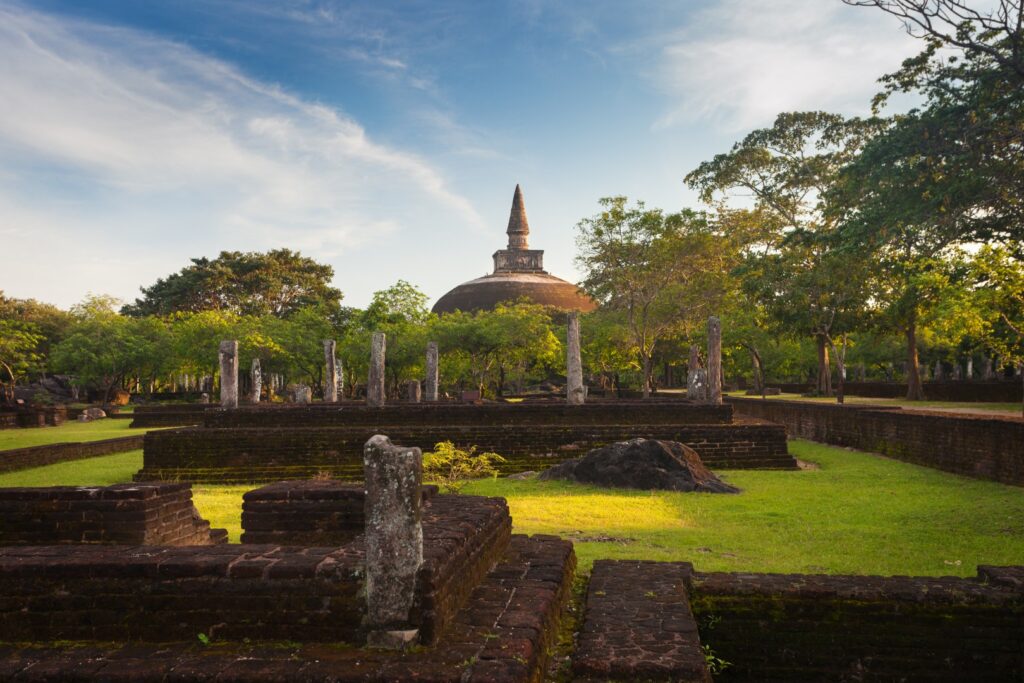
Polonnaruwa is usually toured as a list of ruins; this ride treats it as a gallery. Your specialist guide focuses on what the stone carvers did and why. At the Gal Vihara, a 14-metre reclining Buddha rests on a stone pillow carved so finely it seems to sink beneath his head, while a 7-metre standing figure divides scholars to this day – a grieving Ananda, or the Buddha himself? At the Vatadage, the finest moonstone of the Polonnaruwa period carries a quiet political message: after Chola rule, the bull disappeared from its carved bands, since stepping on an animal sacred to Hindus had become unthinkable. And then the Gal Pota, a stone book nearly nine metres long and around 25 tonnes, hauled from Mihintale roughly 100 kilometres away to carry King Nissanka Malla’s own praises.